What is abdominal plastic surgery (abdominal surgery)?
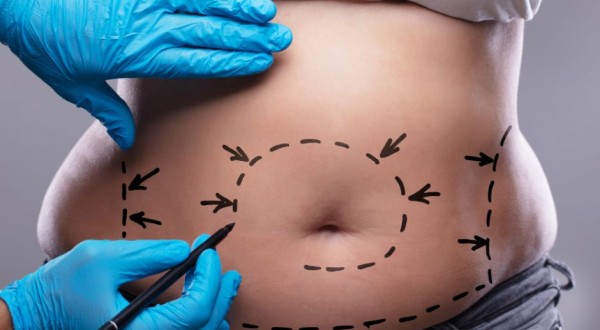
Abdominal plastic surgery is a surgery aiming to remove loose skin and fat tissue from the abdomen and in some cases also suturing the muscles. The excessive amount of fat tissue usually results from pregnancy or body mass loss. The aim of the procedure is to achieve abdominal muscle strengthening and to have a more flat abdomen.
What is the course of the surgery?
Complete abdominal surgery includes making an incision from the hip to the hip, close to pubic hairline, and then performing separate incision around the navel. If your muscles are extended in a straight line, they will be collected together and sutured, in order to decrease the abdominal circumference and strengthen abdominal muscles, which will prevent future occurrence of abdominal hernia. After suturing the subcutaneous tissue and muscles, the skin is pulled down, which makes it possible to remove all excessive amount of skin. Then a small incision is made to place the navel in a new location. At the same time a small abdominal liposuction is being performed, which provides a better cosmetic effect, and additionally, in case of small skin tension, it may lead to excision of bigger skin-fat fold from the abdomen.
Mini abdominal plastic surgery is similar to full abdominal surgery, but it requires much smaller layer detachment, and hence the navel remains untouched. Simplified surgery is appropriate in case of patients who have excessive skin amount and fat tissue solely below the navel.
Both the full abdominal plastic surgery, as well as the mini-abdominal plastic surgery is conducted under general anaesthesia.
What is the risk and what are the side effects of the surgery?
When plastic surgery is taken into consideration, we believe that it should be an extremely pleasant experience. The truth is that complications occur extremely rarely and they are usually quite small, however, every operation is associated with certain risk, depending on individual features of the patient. Therefore it is very important to be aware of these possible problems. They will be discussed with you in detail during your consultation with plastic surgeon in the clinic.
It is possible that a slight haematoma or body fluid accumulation may appear under the skin. Drainage introduced at the time of operation should limit the above. In most cases all subsequent accumulations can be evacuated during control visit, by means of a needle and a syringe. Situation when it shall be essential to return to the operating theatre because of the above are extremely rare.
Scars resulting from abdominal surgery may be concealed under normal clothing, however, these scars are not entirely invisible. Nonetheless, you should expect that during the following year your scars shall flatten and become paler. In some cases scars can also become red and overgrown, and then we deal with keloid (overgrown scar).
You will feel that your abdomen is numb up to six months after the surgery. Sometimes this numbness maintains. Infection and skin necrosis may also appear during the post-operative course. This might also lead to skin loss, which in rare cases requires repeated operation. Occurrence of this complication, although it occurs quite rarely, is most probable among smokers.
The patient is also exposed to risk related with all kinds of surgeries, f. ex. the occurrence of blood thrombosis in lower extremity, which requires treatment (so-called deep vein thrombosis), however, the risk of such phenomenon is extremely rare. Some of these clots may be ruptured and move to lungs, causing acute dyspnoea and chest pain. These symptoms are known as pulmonary embolism, which occurs very rarely, and the probability of its occurrence is higher in people smoking cigarettes.
All risk factors shall be discussed in detail during your consultation preceding the procedure. If you have any questions or doubts, do not hesitate to discuss them with the surgeon.
What is the anticipated period of absence at work and when can the patient return to normal activity?
Period of convalescence may vary depending on condition and general predispositions of each patient. Usually, patient is required to stay in the Medical Centre for 3 to 5 days, and then patient is discharged home. After 2 to 3 weeks it shall be possible to return to work, obviously if the work is not related with considerable physical effort. Final cosmetic result will be visible only after 6 to 12 months after the procedure, when scars will be flat and pale.
How to prepare yourself to pre-operative consultation?
The surgeon will ask you about your general condition and medical history, such as previous diseases or surgeries, allergies, administered drugs, and whether you smoke cigarettes or not. Certainly the surgeon will also be interested in your reasons for considering the surgery and he will ask you to describe changes you desire to introduce. What is more, surgeons need to know whether you plan to lose weight by administering proper diet. Usually it is essential to wait until you gain your target weight before you make the decision be operated.
The surgeon will then examine you, assess the condition of your abdominal muscles, your skin and the amount of excessive skin. After listening to your reasons for undertaking the risk, after evaluating the current condition of your stomach, and after acknowledging your expectations and your desired effects, surgeon will have a complete set of information essential to discuss all possible surgical results in your particular case.
How to prepare yourself to the procedure?
Surgeon will then show you possible dates of operation, and then he will ask you to choose the most suitable one. When planning the surgery, the date should be schedules within two weeks after the lat menstruation, which will limit the risk of post-operative complications. Depending on your age and general condition, you may be asked to perform routine blood tests (morphology, protein level, sugar level, blood coagulation, ionogram, cholesterol level), and cardiac examination (electrocardiogram) and chest X-ray. Throughout the whole time you have the chance to ask all questions that came to your mind during the process or that caused your concern.
On the day of the surgery you will report to the clinic between 12:30pm and 1:30pm. On the day of the procedure it is required not to eat and not to drink six hours before the operation, and this also concerns chewing a gum.
If you smoke, it is worth considering giving up smoking six weeks before the surgery. The following rule is true: the longer you smoke and the sooner you give up, the better, since smoking decreases the amount of oxygen in your blood and may considerably increase the risk of post-operative complications.
It is extremely important to inform the surgeon, anaesthesiologist or nurse on the day of the operation about all prescription medications and over the counter drugs you are taking, including all information concerning recreational drug administration.
Avoid taking medications containing acetylsalicylic acid 2 weeks prior to operation, as these drugs increase the risk of bleeding during the surgery. You may also be asked to discontinue using hormone replacement therapy or oral contraception 30 days before the scheduled procedure. Your physician will advise you on this matter.
Make sure you will be transported home after the operation, because you certainly will not be able to drive a car in your condition.
What happens during the post-operative period?
After you regain consciousness and after the anaesthetic agent will no longer be active, we will encourage you to sit in the bed. You will have a special roll placed under your knees, as this will help you to obtain a more comfortable decision.
You may also have an oxygen mask on your face until the anaesthesia fades, yet in case of some patients this period of time may be prolonged up to 24 hours. You may feel sleepy after the surgery, so you can expect that you will wake up and fall asleep interchangeably throughout the rest of the day.
The whole abdomen will be compressed with a corset or an abdominal belt supporting the dressing. Except for washing time, it should be worn for the first four to six weeks. This should result in decreased oedemas and in general it should lead to a greater comfort.
Small, plastic tube (cannula or catheter) shall be introduced in the vein of your arm or hand. This tube is used to administer fluids (so-called drip or intravenous infusion), in order to make sure that you will not be dehydrated and you will obtain sufficient amount of analgesics and antibiotics. Intravenous tube is usually removed after 72 hours. After such an extensive surgery it may prove essential to give blood in order to supplement its volume.
Additional two or three small tubes (so-called drainage) may be placed on both sides of the wound and the navel, to evacuate the excessive amount of blood or body fluids. They are usually removed before the patient is discharged. You may also have a catheter after the surgery, utilized to drain the urine from the bladder. Due to his catheter, you will not have to get up to go to toilet. The catheter is usually removed on the following day.
You will also be wearing special stockings, in order to prevent the occurrence of blood clots. Stockings may be removed as soon as you start walking, however, it is recommended to wear them up to six weeks.
For the first few days your abdomen will be quite painful. Obviously, you will be given painkillers to make you feel more comfortable. Before leaving the clinic, you will once again be examined by a surgeon and/or a nurse. All permanent sutures should be removed 7 to 10 days after the surgery, just like your drains.
We would like to once again remind you that you will not be able to drive a car in this condition, hence it will be best to have someone at your side, who will stay with you at home during the next few days. In case you have any doubts during this period, do not hesitate to contact the clinic and ask for advice.
During the first few days you may feel uncomfortable when trying to stand straight, however, it is important to try and walk, every two hours during the day and early in the evening. Lying in bed for too long increases the risk of blood clots in lower limbs. Hence, it is important that you gradually increase your physical activity during the next few days.
Tension and pulling both in case of skin and muscles may be painful when coughing or using the toilet. It is highly probable that you will feel a certain degree of discomfort for about a week, but analgesics should help with that. Drinking lot of fluids, and eating increased amount of fruits and food with high fibre content should decrease the risk of constipation.
You should expect a certain loss of sensation within the abdominal area. This condition should be eliminated within several months, yet in some people normal sensation may never fully return.
Scars will remain red up to several months, but after this time they should become more soft and gradually vanish. Scars are more sensitive to UV radiation, hence it is recommended to cover and secure them with creams with UV filters during subsequent 6 months. It is also recommended to avoid lifting heavy objects or intensive training during six weeks after the procedure.
Abdominal plastic surgery step by step
Days 1 to 3
You stay in the clinic under the care of physicians and nurses and you simply follow their recommendations. Urinary bladder catheter is maintained for 1 to 3 days.
You have a corset or abdominal belt on your abdomen. You can feel pressure and discomfort in the abdominal area when standing, as well as when coughing and sneezing. You have compression stockings reducing the risk of thrombosis. Dressings are changed everyday.
Days 5 to 10
Continue taking analgesic drugs. It is important to begin increasing the level of activity. Remain a pillow or roll under knees. Press your abdomen when coughing or sneezing. It is recommended to remove sutures in 7 and 9 day after surgery.
2 to 4 weeks
Pain ailments and tension in the pubic region are reduced. You may be able to return to work, if it doesn’t require too much physical effort.
1 month
You should still expect a feeling of numbness within the abdomen. It is easier to stand up straight now. You can be able to remove the corset and return to work.
2 months
You can lift heavy objects and Begin more exhausting physical exercises.
6 months
Post-operative scars are getting smaller and paler. Loss of sensation in the abdominal region continues to slowly vanish.
12 months
Post-operative scars should seem thinner and lighter now. Only after this period of time it is possible to evaluate the final result of the surgery. Information found in the Internet cannot replace professional counselling offered by a plastic surgeon.
Learn more about all procedures offered by the AMC Art Medical Center. Read more »